This week I have been rereading Hyrum Smith's book "The 10 Natural Laws of Productivity and Happiness." This book was written in the late 1980s and I remember reading it for the first time when I was working at Seagate Technologies, after my time in the Air Force. The core tool talked about in the book is the Franklin Day Planner. I remembering having one such planner, long before smart phones and Palm devices. Mine was a leather bound loose-leaf binder with calendar and note pages in it. I kept my daily tasks list and appointments in that binder, which became a record of my work history at Seagate and beyond. The Day Planner binders, pages and supplies were sold at a store called Franklin Quest, which was located at Valco Mall in Sunnyvale.
At that time, I was a computer programmer. I was able to keep a record of all request for software, who made the request and when and what the requirements were. It seemed that I was the only one keeping a record of this because periodically I would release a program and some would say that it was wrong, in some way. I could produce the record of the request and straighten out the misunderstanding. This, for me, was the power of the system. I could also schedule the various requests and manage my time.
The heart of the Franklin System can be called value based time management. The system starts with the user creating a list of governing values. These values guide the choices the user makes. As a computer programmer I was able to be clear in my communication and transparent in my methods because those were some of my governing values. As such, I wrote software within a set schedule and of the desired quality. People always wondered what I was doing when I brought this thick leather binder to meetings, but they soon found out that it was my way of managing requests for software.
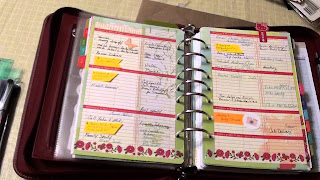
When Palm released their PDA, it gave me a calendar, task list and notes in a pocket sized device. When I got my first Palm device, I got a new Franklin binder which had a place to hold my device. So I could take physical notes and have a paper calendar while learning to use and depend on the Palm device.
Of course the Palm devices gave way to smart phones then the revolution of the iPhone began in 2007. With my first iPhone (3GS) I put away my paper planner and went 100% digital. Now there are a multitude of calendar and note and task managers for both iPhone and Android. The market of task Mann's to has skyrocketed.
Add to the mix David Alan's GTD system which basically through values out the window. It does not matter what you believe with his system, you just get the task done and move into the next action and continue like that until you are done. Today the Franklin Day Planner is all but forgotten and smart phones with GTD apps rule the day, but I remember my Day Planner well and commend Hyrum Smith on his system.
#Franklin Day Planner#
At that time, I was a computer programmer. I was able to keep a record of all request for software, who made the request and when and what the requirements were. It seemed that I was the only one keeping a record of this because periodically I would release a program and some would say that it was wrong, in some way. I could produce the record of the request and straighten out the misunderstanding. This, for me, was the power of the system. I could also schedule the various requests and manage my time.
The heart of the Franklin System can be called value based time management. The system starts with the user creating a list of governing values. These values guide the choices the user makes. As a computer programmer I was able to be clear in my communication and transparent in my methods because those were some of my governing values. As such, I wrote software within a set schedule and of the desired quality. People always wondered what I was doing when I brought this thick leather binder to meetings, but they soon found out that it was my way of managing requests for software.

When Palm released their PDA, it gave me a calendar, task list and notes in a pocket sized device. When I got my first Palm device, I got a new Franklin binder which had a place to hold my device. So I could take physical notes and have a paper calendar while learning to use and depend on the Palm device.
Of course the Palm devices gave way to smart phones then the revolution of the iPhone began in 2007. With my first iPhone (3GS) I put away my paper planner and went 100% digital. Now there are a multitude of calendar and note and task managers for both iPhone and Android. The market of task Mann's to has skyrocketed.
Add to the mix David Alan's GTD system which basically through values out the window. It does not matter what you believe with his system, you just get the task done and move into the next action and continue like that until you are done. Today the Franklin Day Planner is all but forgotten and smart phones with GTD apps rule the day, but I remember my Day Planner well and commend Hyrum Smith on his system.
#Franklin Day Planner#
Comments
Post a Comment